From Student to Professional: A Practical Roadmap for Your First 3 Years of Career
Farhanas' Brainstation
September 15, 2026 · 6 min read
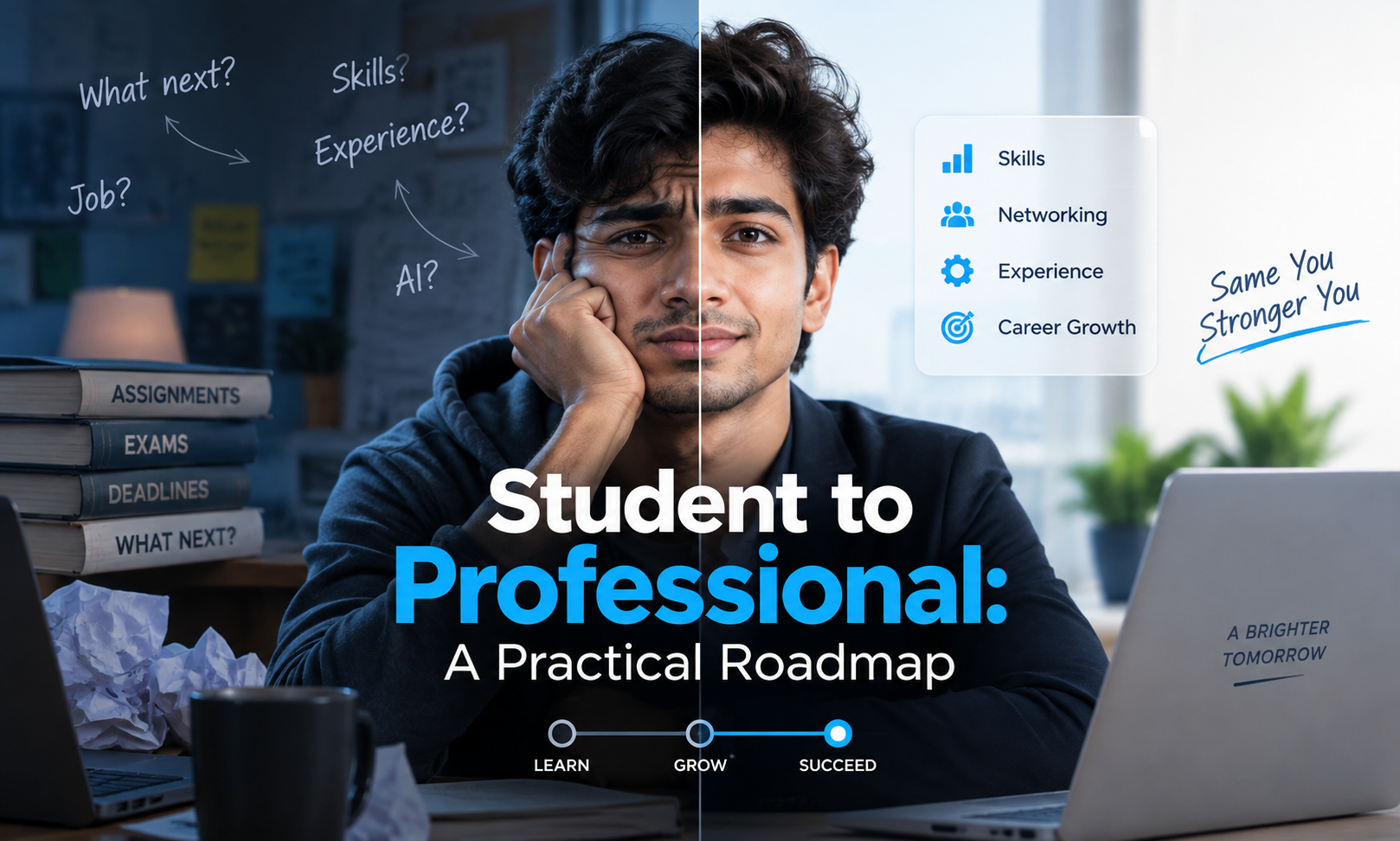
Your first job can feel exciting, confusing and even a little scary.
You may have a degree, but you may still ask yourself:
“What should I learn now?”
“How do I get experience?”
“How can I stand out?”
“Will AI change my career?”
These are normal questions.
The first three years after university can shape how you work, learn and grow. And the workplace is changing quickly. AI, automation, remote work and digital tools are changing the skills employers need.
For young professionals in Bangladesh, this is especially important. Bangladesh has a large young workforce, but many young people still face a gap between education and the skills needed in modern jobs.
So, instead of asking:
“How do I get a job?”
Start asking:
“How do I become someone who can create value?”
Here is a simple three-year roadmap.
Year 1: Learn, Explore and Build Your Foundation
Your first year is not about becoming an expert.
It is about learning how the professional world works.
Start with workplace skills
Learn how to write a professional email, join meetings, make presentations, manage your time and communicate with your team.
These may sound simple, but they matter every day.
Also improve your English communication. You do not need perfect English. You need to explain your ideas clearly and confidently.
Learn AI and digital tools
AI is now part of modern work.
You do not need to become an AI engineer. Start by learning how AI tools can help with research, writing, planning, data work and everyday tasks.
At the same time, learn the basic digital tools used in your field.
For example, a marketing student may learn Google Analytics, advertising platforms and AI tools. A finance student may focus on Excel, data tools and financial software.
The goal is simple:
Learn the tools that help you do your actual work better.
Start building a small portfolio
Do not wait until you have five years of experience.
Create your own experience.
Work on a university project. Build a website. Analyse data. Create a marketing campaign. Write an article. Design something. Help a small business. Join a community project.
Keep your best work in a simple portfolio.
Your CV tells people what you studied.
Your portfolio shows what you can do.
Build your network
Networking does not mean asking everyone for a job.
Start by meeting people.
Attend career events. Join professional communities. Connect with people on LinkedIn. Talk to seniors and industry professionals. Ask good questions.
You never know which conversation may introduce you to your next opportunity.
Try extracurricular activities
Your university life should not only be about classes.
Join a club. Take part in competitions. Volunteer for events. Organise a project. Join a student community.
These activities can help you practise teamwork, leadership, communication and problem-solving.
These skills are useful in almost every career.
Year 2: Choose a Direction and Go Deeper
By your second year of work, you should start understanding what you enjoy and where you want to grow.
You do not need to have your entire career planned.
But you should have a direction.
Choose one core skill
Pick one skill that can become your professional strength.
For example:
Digital marketing
Data analysis
Software development
UI/UX design
Sales
Finance
Project management
Content creation
Cybersecurity
Then go deeper.
Do not just watch courses.
Build things.
If you are learning data analysis, analyse a real dataset.
If you are learning marketing, create a campaign.
If you are learning design, build a portfolio.
If you are learning coding, build a useful project.
Practice turns knowledge into skill.
Learn how business works
Whatever your job is, try to understand the business behind it.
Who is the customer?
What problem does the company solve?
How does it make money?
How does your work help the company?
This mindset can help you move from simply completing tasks to understanding why your work matters.
Find a mentor
By this stage, try to find someone whose career you respect.
It does not have to be a famous person.
It could be your manager, a senior colleague, a teacher or an experienced professional.
Ask for advice.
Listen to feedback.
Learn from their mistakes.
A good mentor can help you see things that are difficult to see on your own.
Start building your professional reputation
Your online presence matters.
Keep your LinkedIn profile updated.
Share useful things you are learning.
Talk about your projects.
Show your work.
You do not need to become an influencer.
You simply want people to understand what you are good at and what you care about.
Year 3: Become Valuable and Take Ownership
By your third year, you should move beyond simply asking:
“What task should I do?”
Start asking:
“What problem can I solve?”
This is a big career shift.
Take ownership
Volunteer for responsibility.
Lead a small project.
Manage a client.
Train a new team member.
Improve a process.
Find a problem and suggest a solution.
You do not need a manager's title to show leadership.
Combine AI with your professional skill
This is where the new workplace becomes very interesting.
Do not think:
AI OR my career skill.
Think:
AI + my career skill.
For example:
A marketer who understands AI can automate research and improve campaign work.
A designer can use AI to explore ideas faster.
A data professional can use AI to support analysis.
A project manager can use AI to organise information and workflows.
The future of work will need both technology skills and human skills such as communication, creativity, critical thinking and adaptability.
Start thinking about your next level
At the end of Year 3, look back.
What can you do now that you could not do three years ago?
What projects have you completed?
What problems have you solved?
Who knows your work?
What results can you show?
These answers are more useful than simply counting certificates.
Your Simple 3-Year Career Roadmap
Think of your journey like this:
Year 1 → Explore and Build
Learn workplace skills, digital tools, AI, communication and teamwork. Build small projects and start networking.
Year 2 → Specialise and Grow
Choose a core skill. Build deeper knowledge, find a mentor, understand business and develop your professional reputation.
Year 3 → Lead and Create Value
Take ownership, solve bigger problems, combine AI with your professional skills and start becoming known for something valuable.
What If You Make the Wrong Choice?
You probably will.
And that is okay.
Your first job may not be your dream job.
Your first skill may not become your main skill.
Your first career plan may change.
That is normal.
The important thing is to keep learning and moving.
The workplace is changing quickly, so your career should not be built around one fixed skill.
Build the ability to learn, adapt and solve problems.
That skill can travel with you.
Final Thought: Your Career Starts Before Your First Job
Your career does not begin when you receive your first salary.
It begins when you start preparing yourself for real work.
Learn something.
Build something.
Meet people.
Ask questions.
Take responsibility.
Make mistakes.
Try again.
Use technology, but do not forget your human skills.
The goal of your first three years is not to have everything figured out.
The goal is to become more capable every year.
If you can look back after three years and say:
“I can do more, solve more and contribute more than I could before,”
you are moving in the right direction.
Your first three years are not about finding the perfect career.
They are about building the person who is ready for the career ahead.
Frequently Asked Questions
What should I do in my first year after graduation?
Focus on workplace skills, communication, digital tools, AI literacy, networking and practical projects.
Should I focus on one skill or learn many skills?
Build a broad foundation first, then choose one main skill and go deeper as you move into your second year.
Is networking really important for young professionals?
Yes. Networking can help you learn about industries, meet experienced professionals and discover opportunities.
Should students learn AI?
Yes, basic AI literacy is becoming useful across many careers. Learn how AI can support your specific field rather than trying to learn everything about AI.
Do extracurricular activities help careers?
They can. Clubs, volunteering, competitions and community projects can help you practise teamwork, leadership, communication and problem-solving.
What should I have after three years?
Try to have a clear professional direction, a strong core skill, practical project experience, a professional network, examples of your work and a habit of continuous learning.




.webp)