Why Your Degree Is Not Enough Anymore: The Skills Employers Actually Look For
Farhanas' Brainstation
September 10, 2026 · 5 min read
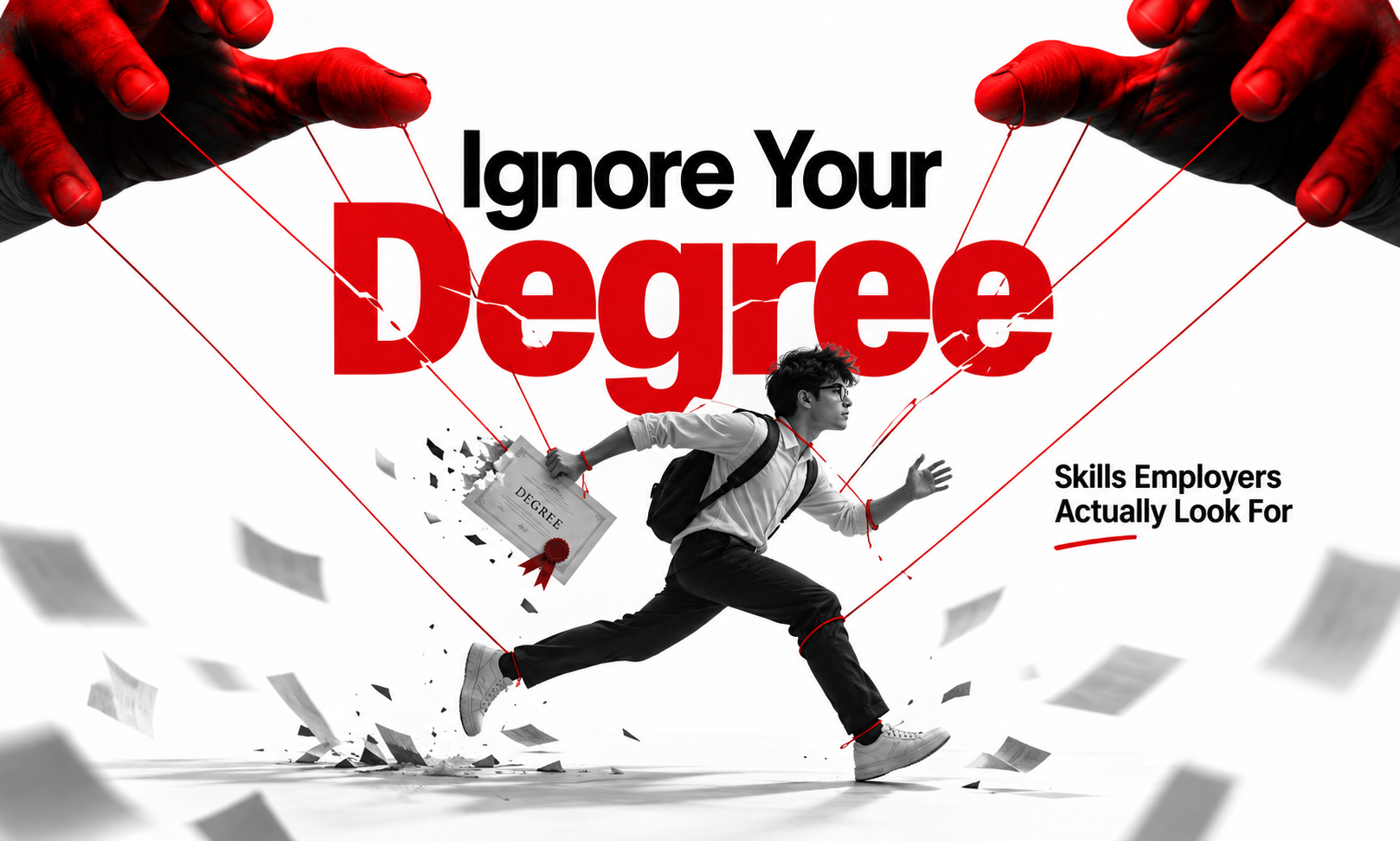
You worked hard for your degree. You attended classes, passed exams and finally graduated.
But then comes the question:
“Why am I still struggling to get a job?”
This is a common experience for many young people in Bangladesh. The problem is not always a lack of education. In many cases, the gap is between what students learn in the classroom and what employers need at work.
A degree still matters. But today, employers also want people who can use what they know, solve problems, communicate clearly and learn new things.
Bangladesh's job market shows why this matters. Recent reports point to a skills mismatch between graduates and employers. The Bangladesh Labour Force Survey 2024 also showed a high number of unemployed university graduates.
So, what can you do about it?
A Degree Gives You Knowledge. Skills Help You Use It.
Think about two graduates.
Both have the same degree.
One can write a professional email, use Excel, create a presentation, solve a real problem and explain an idea clearly.
The other has good exam results but has never worked on a real project.
When an employer looks at both, the degree alone does not tell the whole story.
This is why practical skills are becoming more important.
1. Problem-Solving
Companies do not hire people only to follow instructions.
They hire people to help solve problems.
Can you find out why sales are falling? Can you fix a simple process? Can you find an error in a report? Can you suggest a better way to complete a task?
Start practising with real problems.
Instead of only asking:
“What is the answer?”
Ask:
“What is the problem, and how can I solve it?”
2. Communication
You may have great ideas, but people need to understand them.
Learn how to write a clear email, speak in a meeting, explain your work and present an idea.
Good communication is useful in almost every career.
It can also help Bangladeshi professionals work with international companies, clients and remote teams.
3. Digital Skills
You do not need to become a programmer to be good with technology.
Start with tools that are useful for your field.
Learn Excel or Google Sheets. Understand online collaboration tools. Learn basic data handling. Explore AI tools. If your career needs it, learn coding, automation, design or digital marketing.
The goal is not to know every tool.
The goal is to be comfortable with technology and willing to learn new tools.
4. AI Literacy
AI is changing many types of work.
You do not have to become an AI expert. But knowing how to use AI responsibly can help you research, organise ideas, analyse information and complete some tasks faster.
The World Economic Forum's Future of Jobs Report 2025 identifies AI and big data, networks and cybersecurity, and technology literacy among the fastest-growing skill areas.
Start small.
Learn one AI tool. Use it for a real task. Check its answers. Learn its limits.
5. Critical Thinking
The internet gives us more information than ever.
But not all information is correct.
Critical thinking helps you ask:
Is this information reliable?
What evidence supports it?
Is there another explanation?
What should I do with this information?
This skill becomes even more important when working with AI because AI can produce useful answers, but those answers still need human judgement.
6. Teamwork
Most jobs involve other people.
You may need to work with a manager, designer, developer, customer, client or teammate.
Learn how to listen, share ideas, accept feedback and complete your part of a team project.
A good team member does not always need to be the loudest person in the room.
They need to be someone others can depend on.
7. Adaptability
Your first job may not look like your future job.
Technology will change. Companies will change. New roles will appear.
That means your ability to learn is a career skill.
Do not think:
“I already finished studying.”
Think:
“I finished one stage of learning.”
8. Practical Experience
This is where many students can start making a big difference.
You do not always need a full-time job to gain experience.
Work on a small project.
Create a website.
Analyse a real dataset.
Run a small marketing campaign.
Design something.
Volunteer for a project.
Help a local business.
Build something for yourself.
These experiences give you stories to share during interviews and work to show in your portfolio.
9. Business and Customer Understanding
Even if you are not studying business, it helps to understand how organisations work.
Learn the basics of customers, sales, marketing, costs and value.
Ask:
“Who is the customer?”
“What problem are we solving?”
“Why would someone pay for this?”
These simple questions can change how you think about work.
10. A Learning Mindset
Perhaps the most important skill is the ability to keep learning.
You do not need to learn everything.
Choose one useful skill.
Learn it.
Practise it.
Use it in a real project.
Then move to the next one.
This is much better than collecting certificates without using what you learn.
So, Is Your Degree Still Important?
Yes.
A degree can give you subject knowledge, a foundation for your career and access to opportunities that require formal education.
But a degree is not the complete package.
The strongest approach is to combine:
Education + practical skills + experience + communication + continuous learning.
Bangladesh is working to improve the connection between education, training and the labour market, including stronger industry links and workplace-based learning.
That change also gives young professionals an important message:
Do not wait until graduation to become job-ready.
Start now.
What Can You Do This Month?
You do not need a five-year plan.
Start with one month.
Week 1: Choose one skill.
Week 2: Learn the basics.
Week 3: Use the skill in a real project.
Week 4: Put the project in your portfolio and share what you learned.
Then repeat.
Your degree tells people what you studied.
Your skills show people what you can do.
And in a changing job market, being able to show what you can do can make your next career step much easier.
Frequently Asked Questions
Is a university degree still useful in Bangladesh?
Yes. A degree remains important for many careers. But employers may also look for practical skills, experience, communication and problem-solving ability.
What skills should fresh graduates learn?
Start with communication, problem-solving, digital skills, AI literacy, teamwork, critical thinking and practical experience.
How can students gain experience without a job?
Work on personal projects, internships, volunteering, freelance work, university projects or small projects for real organisations.
Do I need to learn AI to get a job?
Not every job requires the same AI skills. However, basic AI literacy can help many professionals understand and use modern workplace tools.
What is more important: a degree or skills?
They serve different purposes. A degree provides formal education and subject knowledge, while practical skills help you apply knowledge in real situations. Building both can strengthen your career preparation.


.webp)